
Buddy systems for safety – the pros, cons and alternatives
Employers have a duty of care to protect workers’ health, safety and wellbeing whilst at work. For decades a popular approach to fulfilling this duty has been through the implementation of a buddy system. However is this the most efficient and effective way to keep employees and contractors safe at work, particularly lone or remote workers?

What is a buddy system?
A buddy system is a safety management practice and typically two colleagues in similar roles are paired up to look out for each other’s safety and wellbeing. The colleagues may share responsibility for their approach to safety, discussing hazards, risk assessments, and checking up on each other’s wellbeing at regular intervals. If there is an incident, usually the buddy is the first point of contact to provide assistance.
READ: Duty of care
How does a buddy system work?
A buddy system usually works in one of two ways:
- In-person: the buddies work and complete their tasks together as a team. If the work is high risk, such as chainsaw operators or working at height, one buddy will be assigned to perform the task, while the purpose of the other buddy will be to ensure their partner’s safety.
- Digital and remote: the buddies work in isolation, sharing details of their itineraries in advance, and check up on each other throughout their shift.
As a rule buddy systems rely on each buddy to carry a mobile phone to enable regular communication and raise the alarm if there is an incident.
Where is a buddy system used?
Buddy systems can be found in many sectors from healthcare, retail, estate and land agents to mining, construction and transportation.
Advantages of a buddy system
- If you work alongside your buddy as a team, there is supervision, safety in numbers and the reassurance they can help if an incident occurs.
- Buddies can share skills and knowledge with each other.
- Enable problem-solving.
- Counter isolation and provide emotional as well as practical support.
- Can improve teamwork and collaboration, increase a sense of belonging and lead to improved employee satisfaction.
- Utilises existing mobile phones and does not require additional equipment.
Disadvantages of a buddy system
- Expensive, particularly if the buddies work as a team, effectively doubling staffing costs.
- If working together as a team an incident may involve both buddies, making it impossible to raise the alarm.
- If lone working and an incident occurs, the lone worker may not be able to contact their buddy to ask for help.
- A buddy system may unintentionally place increased burden and stress on workers, particularly if there is an incident.
- Holidays and leave absence are difficult to manage requiring backup buddies to be found.
- Unreliable if a buddy is working in a location with poor or no mobile phone signal.
What is the best alternative to a buddy system?
A dedicated worker monitoring system offers a more robust and reliable approach to managing safety and wellbeing.
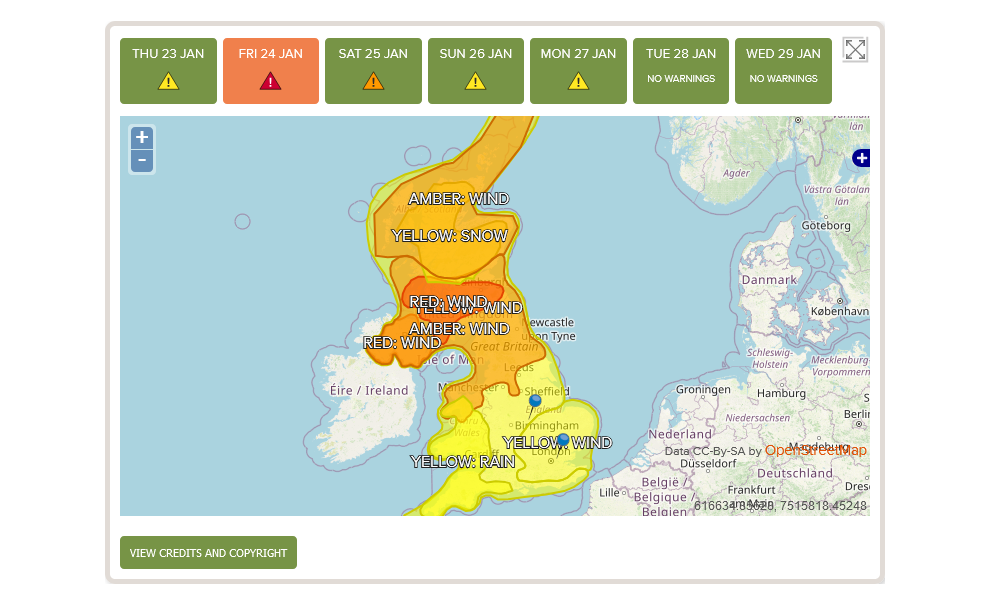
Trackplot's online Portal displaying numerous live severe weather warnings and the locations of two lone workers in a yellow weather warning zone.
Benefits of the Trackplot system include:
-
Available for use 24/7/365
A worker monitoring system can be used around the 24 hour clock enabling people with different roles, shifts and working patterns to use the system when they need it.
Trackplot’s integrated system includes an online Portal which is accessible 24/7/365 so you can be reassured of the welfare of your workers at any time.
-
Shared responsibility
Rather than relying on a single colleague (the buddy), the management of workers and alerts are the responsibility of your organisation, shared across a response team.
-
Reduce the time to respond to incidents
A worker monitoring system normally includes Notifications to advise when something does or does not happen. This enables the response team to react immediately.
Trackplot provides Notifications which are triggered on an exception-basis under specific conditions e.g. if a worker fails to Check-in and goes Overdue, if a worker needs Assistance and they request help, starts a High Risk Activity or sends an SOS.
-
SOS
In an emergency a worker can raise the alarm at any time. This alarm is handled by an Alarm Receiving Centre which co-ordinates the emergency services.
-
Unable to request help
If a worker is unconscious or incapacitated and cannot raise an alarm they will become Overdue which automatically triggers an alert.
-
Location sharing
Each Notification includes the GPS location of the worker to confirm where they are and to enable any response.
-
Real-time visibility
Active workers, their location and Notifications can be accessed in real-time in the Trackplot Portal.
-
Location-appropriate devices
The type of device used by a worker depends on the locations they work in. Those with good mobile phone reception can use a Lone Worker App on their mobile phone and revert to SMS in low signal areas. Those with poor or no mobile signal can use GPS devices which operate using satellite networks and do not need mobile coverage to work.
-
Improved efficiency
Workers can concentrate on tasks without disruption, there is no need to remember to call or check up on their buddy.
-
Low-cost alternative
Monitoring solutions offer a low-cost alternative to employing two members of staff to complete a single person job.
More about the Trackplot system
Trackplot’s monitoring system is specifically designed for outdoor workers or remote workers in isolated locations, whether in teams or working alone. Utilising both satellite and mobile communication networks the range of functionality, including tracking, enables workers to keep in touch wherever they are.
Forthcoming and real-time weather and environmental data allows you to plan work schedules ahead to reduce risks, and assess vulnerabilities if a worker is in trouble.