
SOS alarm response
When a lone worker or remote working team operating in an isolated geographical location needs urgent help they can raise an SOS alert at the touch of a button on their GPS Device. But who is involved in the emergency response and how is it managed if there is no mobile phone signal to communicate?
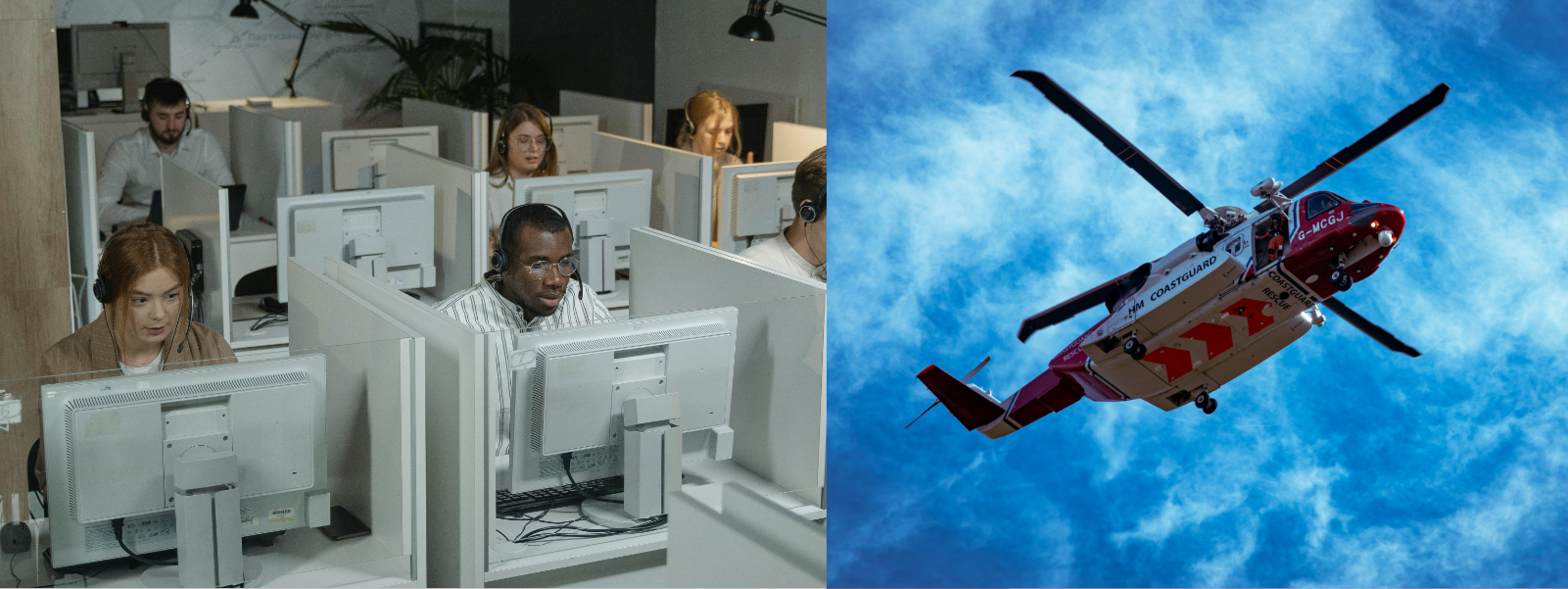
This article explains the component parts of an emergency response and what a typical response looks like.
Key components of SOS alarm response
The key components of a lone and remote worker SOS alarm response are:
- Lone worker or remote working team.
- GPS device and SOS Message.
- Alarm Receiving Centre (ARC).
- SOS Emergency Contacts.
- Escalation Procedures.
- Trackplot Portal and data.
What happens when an SOS alarm is triggered?
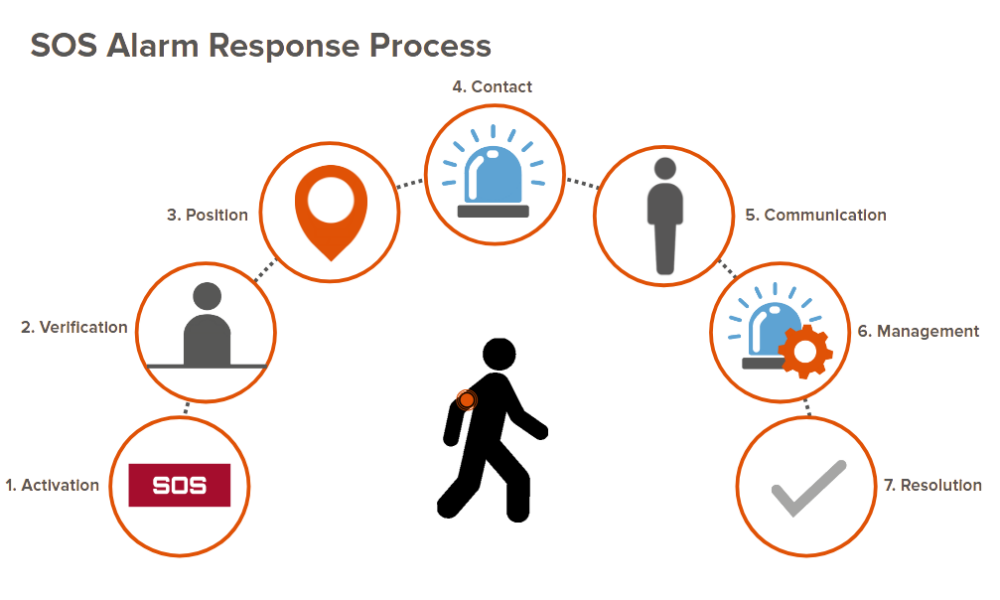
-
1. Activation
SOS alarm sent by the worker using a GPS device. An SOS Notification is sent to the ARC and the organisation’s SOS Emergency Contacts to raise the alarm.
-
2. Rapid verification
Trained ARC operators typically respond within minutes to gather information to assess the situation.
-
3. Real-time position
GPS device provides precise position co-ordinates (latitude and longitude) of the worker to help the ARC operator assess the situation.
-
4. Contact emergency services
ARC controller contacts the emergency services to decide the most appropriate blue light response for the worker’s location. This could be mountain rescue, coast guard, police, ambulance or fire and rescue.
-
5. Communication
ARC controller calls your organisation’s nominated SOS Emergency Contacts to establish if the SOS is real or a false alarm. Gathers specific information to get context about what the worker does including their job role, itinerary for the day, potential risks they could be exposed to (including terrain, weather conditions, working in the dark, equipment being carried, any medical conditions).
-
6. Management of the escalation
The ARC controller will make decisions based on the information gathered and liaise with the emergency services throughout the incident. Any new information received or changes are constantly relayed to the emergency services to inform their response.
-
7. Resolution / De-escalation
The worker is rescued and the SOS case is closed / the alert is confirmed as a false alarm and the incident is closed.
An SOS alarm is never closed until the worker’s welfare is confirmed.
Common mistakes
The emergency response is only as good as the information available in that moment. Many factors can complicate or hinder the speed and quality of an emergency response including:
- Poor set up of the worker monitoring system.
- Lack of Escalation Procedures.
- No data available in the worker monitoring system to inform decisions.
- Worker has low battery on their GPS Device.
- SOS Emergency Contacts have left the organisation.
- SOS Emergency Contacts do not respond to ARC calls.
Trackplot’s approach to emergency situations
Trackplot helps employers move from a reactive to a proactive approach to employee and contractor safety.
SOS is a vital function of our system and is included in all Trackplot World satellite-based packages. Our employee monitoring system is supported by a 24/7/365 Alarm Receiving Centre (ARC) which manages all SOS alerts – providing immediate, tailored assistance when a worker triggers an SOS – and liaises with the emergency services.
During onboarding the Trackplot team works with each customer to:
- Explain what a “good set up” looks like for their type of organisation, working patterns and circumstances.
- Explore what makes a good SOS Emergency Contact and identifying appropriate people in their organisation.
- Identify critical information to capture in worker’s Profiles which will be useful in an emergency. This is influenced by job roles and risks.
- Develop a Lone Working and Fieldworking Policy, Standard Procedures and Escalation Procedures.
- Deliver training to workers so they know how to raise an SOS alarm and what to expect. Encourage workers to supply information that could save their life.
- Deliver training to SOS Emergency Contacts so they understand their role and what to do when they receive an SOS Notification and a call from an ARC operator.